Niche Themes
Anime-Inspired Car Accessories – A Style Guide for Otaku Drivers
Anime car culture has gone from niche to mainstream in three years. Your daily driver can carry that aesthetic without looking like a costume - if you know which accessories to invest in and how to pair them.
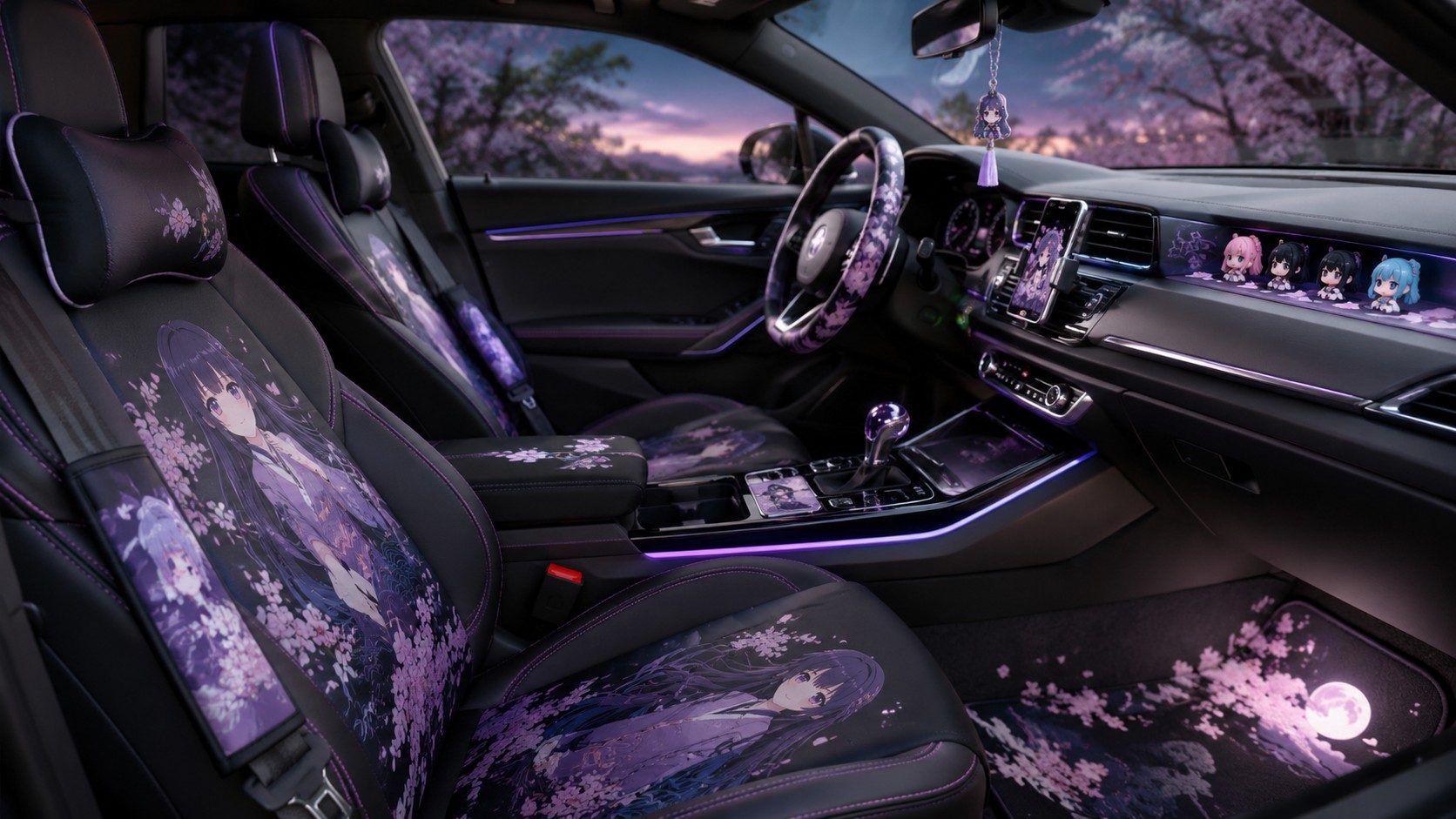
The car you drive every day is one of the few spaces you control completely. For anime fans in 2026, that space is no longer an afterthought – it is a canvas. The accessory market has caught up to demand, and you can now build a fully coordinated anime-inspired interior for less than a single OEM upgrade costs.
This guide breaks down the eight accessory types worth knowing, how to pick your aesthetic without ending up in costume territory, and the pairing mistakes that turn a clean build into chaos.
Why Anime Fans Customize Their Cars
Three reasons drive the surge in 2026:
- The audience grew up. People who watched anime in college now have disposable income and their own cars. Personalization is back in their hands.
- Print-on-demand made it affordable. A complete anime interior costs $250-400 in 2026. Five years ago that was $1,000+.
- Daily expression matters more than status. Younger drivers care less about badges, more about whether the car reflects who they are.
The accessories below let you signal fandom in a daily-driver-friendly way. Subtle enough to not get hassled at work, present enough to make your commute feel like yours.
The 8 Anime-Inspired Car Accessory Types
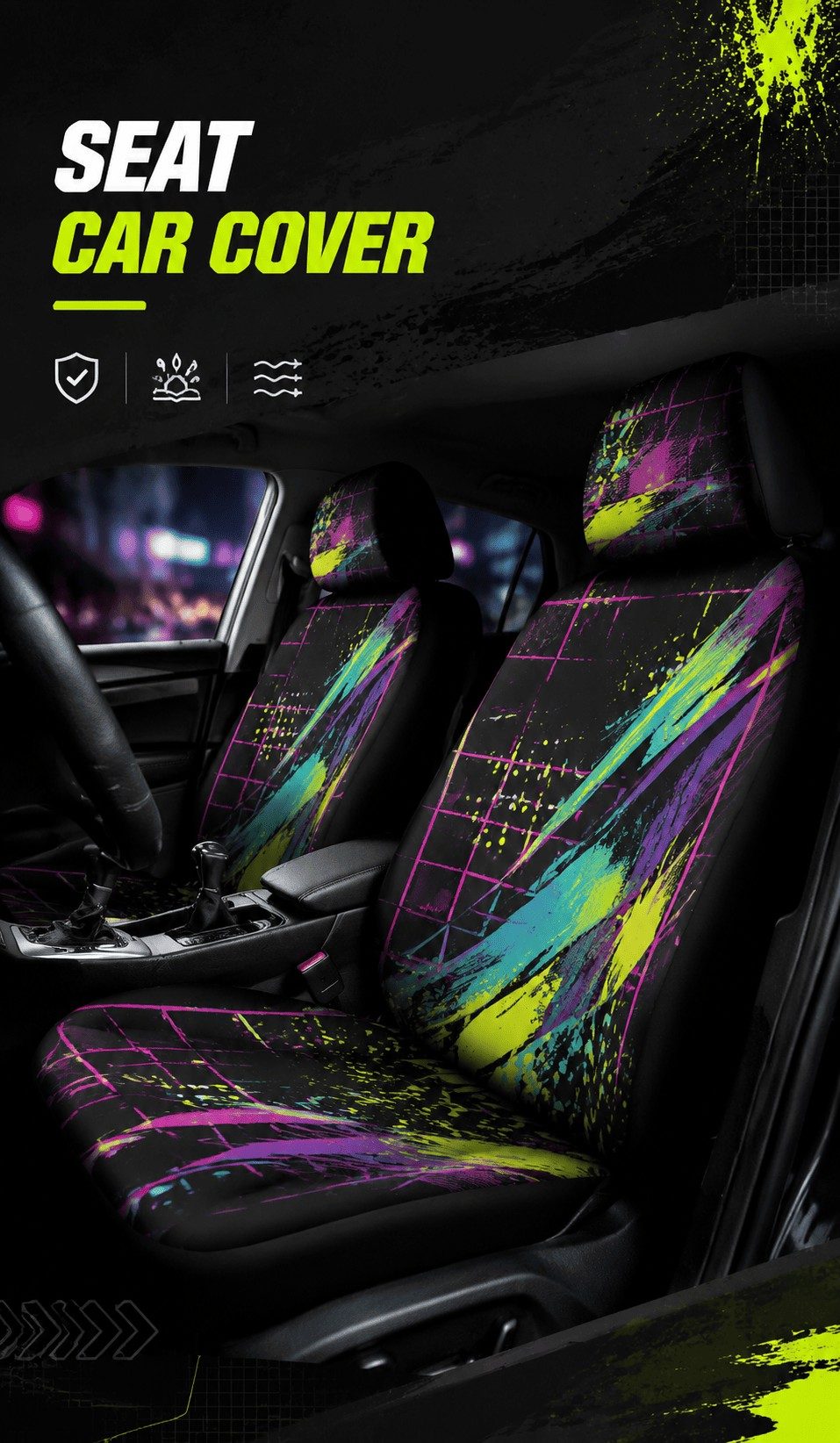
1. Seat covers – The biggest visual impact. Cover the whole front seat (sometimes rear too). See best custom car seat covers in 2026 for materials and fit guide.
2. Floor mats – Visible to passengers but discreet. Lowest commitment way to add character. See anime car floor mats guide.
3. Steering wheel covers – Touched constantly. Adds tactile personality. See personalized steering wheel covers guide.
4. Seat belt covers – Slip-on padded covers for shoulder belts. Quick swap, high visual ROI.
5. Windshield sunshades – Folded inside the window when parked. Big surface area = big design statement when displayed.
6. Air fresheners – Vent clips or hanging designs. Cheap entry point ($5-15).
7. Decals + stickers – Window or panel-mounted. Permanent commitment – choose carefully.
8. Keychains + lanyards – Off-vehicle, but part of the daily routine. Often the gateway accessory.
Browse the full anime collection – over 4,800 anime-themed products across all these accessory types.
Picking Your Aesthetic (Action vs Slice-of-Life vs Mecha)
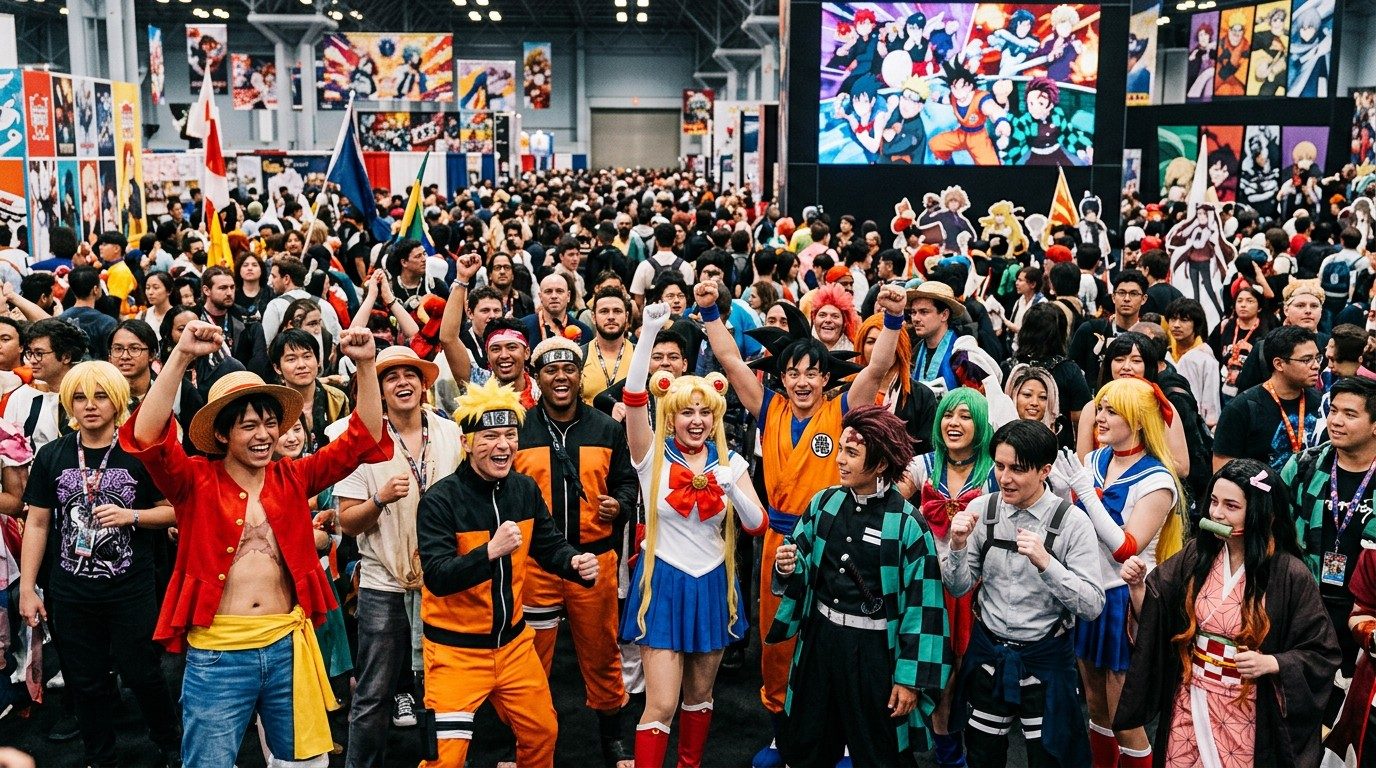
Anime spans more visual territory than most people realize. Picking a coherent aesthetic prevents the “yard sale” look where every accessory comes from a different show.
Action / Shounen aesthetic:
- Bold colors, dynamic poses, high-contrast prints
- Energy: kinetic, intense, “fight scene”
- Best paired with: aftermarket steering wheels, red interior accents, sport seats
- Risks: looks busy fast, fades to “chaotic” if not balanced
- Try this if: your car is also sporty / loud / lifted
Slice-of-Life / Calm aesthetic:
- Pastel tones, scenic illustrations, soft characters
- Energy: peaceful, nostalgic, “Sunday morning”
- Best paired with: stock or premium-stock interiors, neutral colors, simple wheel covers
- Risks: looks “too cute” on aggressive vehicles – mismatch makes the build feel confused
- Try this if: your car is also calm / sedan / family-friendly
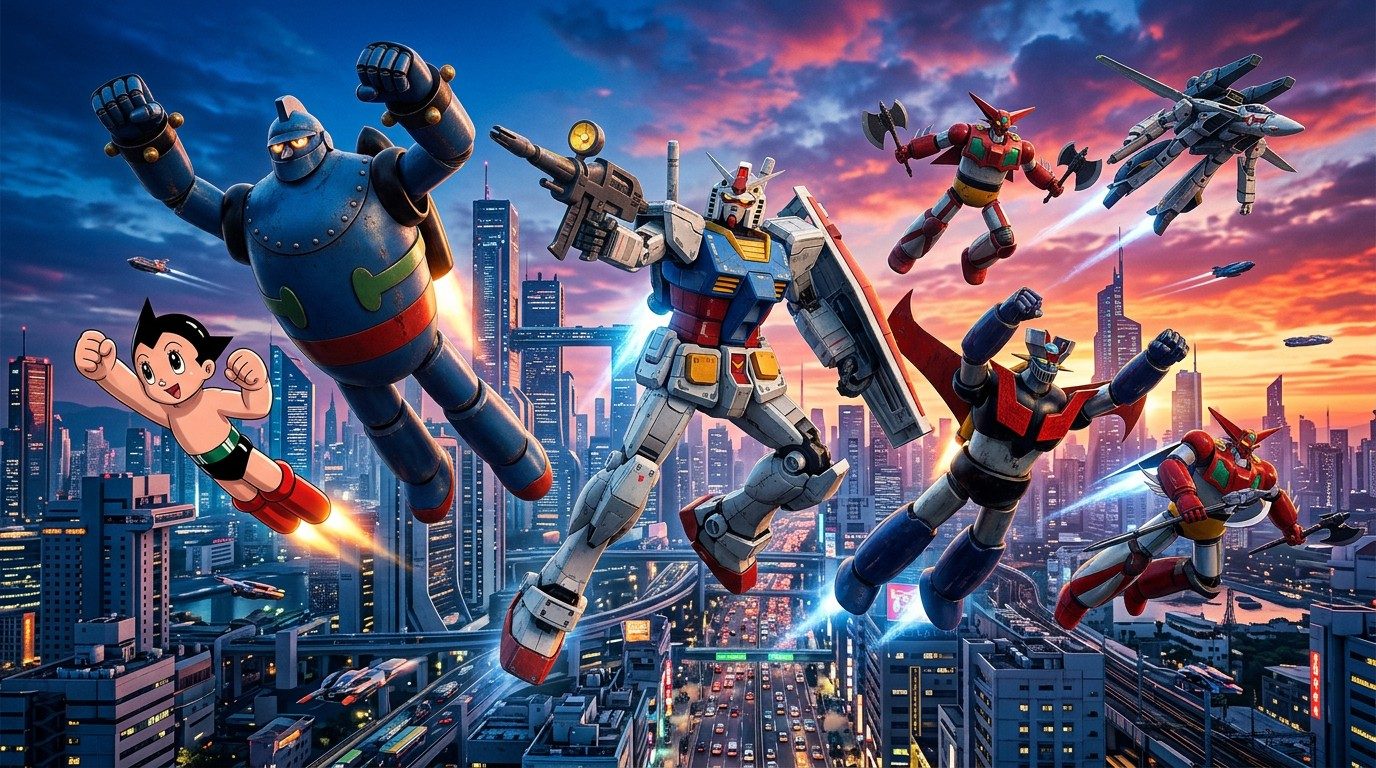
Mecha / Sci-Fi aesthetic:
- Metallic accents, mechanical detail, blue/silver/orange palettes
- Energy: technical, futuristic, “engineering blueprint”
- Best paired with: carbon fiber accents, blue ambient lighting, JDM-influenced builds
- Risks: harder to find products outside specific categories
- Try this if: your car is also modified / sport / tuner
Manga / Black-and-White aesthetic:
- Cross-hatched line art, panel layouts, monochrome
- Energy: artistic, restrained, “book illustration”
- Best paired with: leather seats, blacked-out interiors, minimalist builds
- Risks: hardest to find true-monochrome products in 2026
- Try this if: your car is also premium / luxury / mature
Pick one. Build the whole interior within it. Resist the urge to mix.
Pairing Designs (Don’t Mix These)
Three rules save 90 percent of bad anime builds:
Rule 1: One category only.
Slice-of-life mats with action seat covers = confused. Stick to one of the four aesthetic categories above.
Rule 2: One bold piece, others quieter.
If your seat covers are vivid full-character, your floor mats should be subtle (pattern or silhouette, not full scene). Or reverse – bold mats, simple seats. Going bold everywhere = visual overload.
Rule 3: Carry one color through.
Pick the dominant color in your most prominent piece. Repeat it – even subtly – in 2-3 other accessories. This is what makes the build “feel intentional” rather than “feel collected.”
Avoid these specific mistakes:
- Mixing four+ different anime series. Three at most, ideally two.
- Pairing chibi-style cute designs with edgy/dark designs.
- Using the same character on multiple accessories (creates a shrine, not a build).
- Putting full-character seat covers in a car that still has the dealer license plate frame on.
Subtle vs Loud: How Public to Go
A personal calibration question most buyers don’t think about until day three of ownership.
Subtle build (1-3 accessories, all coordinated):
- Examples: anime steering wheel cover + matching sunshade + air freshener
- Visibility: only passengers and you notice
- Use case: daily commuter, professional jobs, family-friendly driving
- Resale: zero impact – all pieces remove cleanly
Mid-level build (4-5 accessories, full interior theme):
- Examples: seat covers + floor mats + steering wheel + sunshade + air freshener
- Visibility: anyone who looks in the windows
- Use case: enthusiast daily driver, weekend cars, regular meet-up attendees
- Resale: slight impact if accessories are not removed before sale
Full commitment (interior + exterior):
- Examples: full interior + decals + custom plate + matching license frame
- Visibility: everyone sees it from a parking lot away
- Use case: show cars, dedicated otaku builds, brand ambassador vehicles
- Resale: significant impact – market is narrower for branded vehicles
Most buyers should aim for “mid-level” in 2026 – enough presence to make the car feel yours, not enough to lock yourself in.
Quality Signals (Avoid Cheap Prints)
The market has split into two tiers. Knowing what separates them saves you money in the long run.
Cheap tier ($15-30 per item):
- Sublimation printing on thin polyester
- Colors fade within 6-12 months under sun
- Backing materials are minimal
- No reinforced edges, fraying within a year
- Source: Amazon dropshippers, AliExpress
Quality tier ($50-100 per item):
- Double-sided sublimation on 250+ GSM polyester
- UV-resistant inks – 3-5 year fade resistance
- Heavy-duty backing (rubber-bonded for mats, microfiber for seat covers)
- Reinforced stitching at stress points
- Source: dedicated POD shops with custom production
How to tell at a glance:
- Price under $30 for “custom” seat covers = cheap tier
- “Made in 5-7 days” = quality custom-printed (good)
- “Ships in 24 hours” = pre-printed inventory (often cheap tier)
- Reviews mention “color faded in 3 months” = cheap tier
For quality benchmark, EzCustomcar’s anime car accessories start at $25-30 (keychain/sunshade tier) and scale to $70-80 for seat covers.
Car Show Tips for Otaku Builds
If you take your build to meets:
- Clean the day before, not the day of. Day-of cleaning leaves visible streaks under direct sun. Night-before clean has time to dry fully and look settled.
- Display the sunshade folded inside the windshield. Large flat surface acts as the centerpiece. Way better visual than products stacked in the trunk.
- Match the air freshener. Sounds silly. Judges notice. A pine tree freshener in an anime build kills the aesthetic.
- Bring a backup of one accessory. Weather hits unexpectedly. Having a spare sunshade or seat belt cover saves the build.
- Skip the costume. Wearing anime gear yourself while showing the car reads as “look how much I like this.” Letting the car speak alone reads stronger.
Frequently Asked Questions
Are anime car designs trademark-safe?
Designs that use generic anime aesthetic (color palettes, art style, recognizable silhouettes without specific character names) are generally safe. Designs that name specific characters or use direct character art carry IP risk. For blog-mentioned designs we focus on “inspired by” aesthetics – check individual product pages for specifics.
How do I match designs across accessories?
Pick a primary color from your most prominent accessory (usually seat covers or mats). Repeat that color – even subtly – in 2-3 other pieces. Same category of art style across all accessories.
Best anime accessories for daily drivers?
Floor mats (lowest commitment, highest dirt resistance), seat belt covers (quick swap), and steering wheel covers (replaceable in minutes). Skip permanent decals if you might sell within 3 years.
Do these hurt resale value?
Removable accessories (mats, covers, sunshades) – no impact, they pull out at sale. Permanent decals – 5-10 percent resale hit at most dealers. Window tints with anime motifs – same as removable accessories if professionally applied.
Can I mix anime themes with non-anime accessories?
Yes, if you treat the non-anime pieces as neutral background. A black or carbon-fiber steering wheel cover pairs fine with anime mats. Avoid mixing two character themes (anime + sports team, anime + military, etc.) – this is where builds get chaotic.
Final Recommendation for 2026
For an anime-inspired car build that ages well:
- Pick one aesthetic category (action / slice-of-life / mecha / manga) and stay in it
- Budget $200-400 for a coordinated 5-piece interior set in 2026
- Lean toward quality tier ($50-80 per accessory) over cheap tier
- One bold piece, others quieter – resist going bold across all five accessories
- Test the aesthetic with one accessory first before committing to the full set
Your interior should reflect what you actually love – not what was on sale that week. Pick something that connects to the anime that shaped you, and let the rest of the build follow.
Browse our full anime car accessories collection – over 4,800 designs across all eight accessory types and four aesthetic categories.